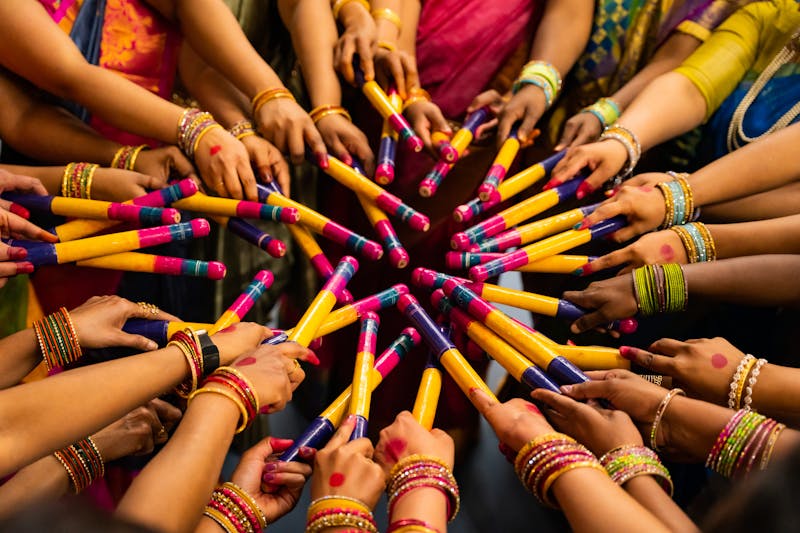
More Than Circular Steps and Claps
If you’ve ever attended a Navratri night, you know the magic. The lights, the music, the colorful lehengas and kediyas, the sound of dhol and claps — it feels like the entire atmosphere is alive.
But if you look closely, you’ll realize something deeper: Garba is not just a dance.
It’s not just about moving in circles to a catchy song. It’s about devotion to the Divine, connection with the community, respect for tradition, and a celebration of life itself. For many people, Garba is an emotion, a memory, and a spiritual experience wrapped in rhythm and color.
In this article, we’ll explore why Garba is not just a dance, but a powerful cultural and spiritual expression that has survived, evolved, and united people for generations.
The Spiritual Roots of Garba
To understand why Garba is not just a dance, we have to go back to its roots.
The word Garba comes from the Sanskrit word Garbha or Garbha Deep, which means “womb” or “earthen lamp.” Traditionally, a decorated clay pot with small holes, called a Garbi or Garbo, is placed in the center with a lamp lit inside. People dance around this light.
This has a beautiful symbolic meaning:
- The lamp represents divine energy, usually associated with Goddess Durga or Amba.
- The circular movement represents the cycle of life — birth, life, death, and rebirth.
- The participants represent souls moving around the eternal source of power.
When you realize this, you truly see that Garba is not just a dance, but a moving prayer — a way to honor Shakti, the divine feminine energy.
For more on the cultural and spiritual meaning of Garba and Navratri, platforms like Cultural India and ISCKON educational pages offer deeper insights into traditions and devotional practices.
Garba as a Celebration of Culture
From Gujarat, Garba has now reached global stages — from New Jersey to London, from Dubai to Sydney. But even as it expands worldwide, its essence remains rooted in Indian culture.
Here’s how Garba is not just a dance, but a cultural celebration:
- Traditional Outfits:
The vibrant chaniya choli, heavy jewelry, mirror work, and kediyu all narrate stories of regional craft and identity. - Folk Music and Instruments:
The use of dhol, dholak, manjira, and traditional Garba songs keeps folk music alive, even in the era of remixes. - Language and Lyrics:
Many Garba songs are in Gujarati and include devotional and poetic verses. By singing and dancing along, younger generations connect to language and heritage. - Regional Styles:
From traditional raas to high-energy dodhiya or modern fusion Garba, every style carries cultural flavor.
That’s why enthusiasts say with pride that Garba is not just a dance — it’s a living, breathing expression of Gujarati and Indian culture across the world.
Community, Connection, and Togetherness
In a world where people are more connected online and less connected in real life, Garba nights do something special — they bring people together physically, emotionally, and spiritually.
Another reason Garba is not just a dance is because it is a community experience.
During Navratri, you’ll see:
- People of all ages — kids, teens, adults, and elders — dancing together in the same circle.
- Friends meeting after long gaps, families attending as a group, neighbors bonding over steps and songs.
- Strangers forming instant connections simply by syncing their steps and smiles.
There are no distinctions of status, job title, or background on the Garba ground. Everyone is equal — just another devotee dancing in front of the divine.
This sense of unity, belonging, and shared joy is a big part of why Garba is not just a dance, but also a social glue that binds communities together.
Garba as a Form of Devotion and Meditation
For many, Garba is less about “showing off steps” and more about feeling connected to something higher. When you dance in rhythm, with your hands raised and heart open, it can feel like a meditation in motion.
This is another powerful reason why Garba is not just a dance:
- The repetitive, circular movements help people enter a calm yet energized state.
- The focus on the central lamp or idol reminds the mind of sacred presence.
- The chants, claps, and coordinated rhythms create a powerful group energy.
People often say they feel lighter, happier, and emotionally cleansed after a long Garba night. It’s not just physical exercise — it’s spiritual therapy.
Modern Garba: Fusion, Global Stages, and Youth Appeal
Even as the world changes, Garba continues to evolve while keeping its roots intact. This modern evolution is another proof that Garba is not just a dance, but a flexible cultural force.
- Fusion Music:
DJs now mix traditional Garba with EDM, Bollywood, and global beats. The vibe changes, but the core circular formations and devotion remain. - College and Corporate Garba Nights:
From university campuses to office events, Garba is used as a way to bring people together and celebrate Indian festivals in a fun way. - Global Competitions and Shows:
Indian communities abroad organize Garba competitions, themed nights, and cultural festivals, making it a global identity marker.
Through all of this, young people are discovering that Garba is not just a dance, but also a cool way to stay connected to their roots while expressing themselves freely.
Health and Emotional Benefits of Garba
There’s yet another dimension — Garba is not just a dance because it also offers amazing health benefits.
- It’s a full-body workout that can help with stamina, flexibility, and cardiovascular health.
- It can reduce stress by releasing endorphins and keeping people active.
- It encourages people to take a break from screens, move their bodies, and socialize.
However, since Garba nights often involve long hours of dancing, late nights, and crowded spaces, it’s important to listen to your body.
Note
If you have any medical conditions such as heart problems, joint pain, breathing issues, or recent injuries, it’s wise to consult a doctor or healthcare professional before participating in intense Garba sessions or long Navratri nights. A doctor can guide you on how to stay safe, hydrated, and physically comfortable while enjoying the celebration.
How to Experience Garba in Its True Essence
If you really want to understand why Garba is not just a dance, try experiencing it wholeheartedly:
- Don’t worry too much about “perfect steps” — focus on the joy and energy.
- Observe the central lamp or idol while dancing and feel the devotional aspect.
- Notice how everyone, from children to elders, moves in harmony — it’s a visual reminder of unity.
- Listen to the lyrics of traditional Garba songs; many are full of devotion and storytelling.
- Take a moment to feel gratitude — for culture, community, health, and the ability to participate.
You can also explore more about Garba and Navratri traditions on websites like:
- Gujarat Tourism for cultural background and festivals.
- Incredible India for heritage insights and celebrations across the country.
These resources add more depth to your understanding of how Garba is not just a dance, but a festival of the soul.
Conclusion: A Dance, a Devotion, a Way of Life
When you look beyond the colorful outfits and energetic beats, you begin to see why Garba is not just a dance.
It is:
- A devotional practice, honoring the Goddess and divine energy.
- A cultural celebration, keeping traditions, languages, and crafts alive.
- A community gathering, uniting people across age, class, and background.
- A personal journey, where you can feel lighter, happier, and more connected.
So the next time you step onto a Garba ground, remember:
You’re not just dancing.
You’re praying with your feet, celebrating with your heart, and connecting with generations of culture and faith.
If Garba has ever made you smile, feel alive, or feel closer to something bigger than yourself — then you already know the truth:
Garba is not just a dance; it’s an experience, a blessing, and a celebration of life itself.